
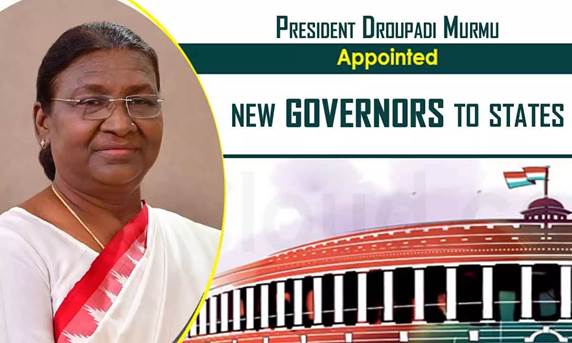
In early March 2026, President Droupadi Murmu approved a significant reshuffle of Governors and Lieutenant Governors across several Indian states and Union Territories, marking one of the most important administrative changes ahead of the year’s assembly elections.
The move covered nine states and UTs, reflecting strategic placements that resonate with constitutional responsibilities as well as political navigation.
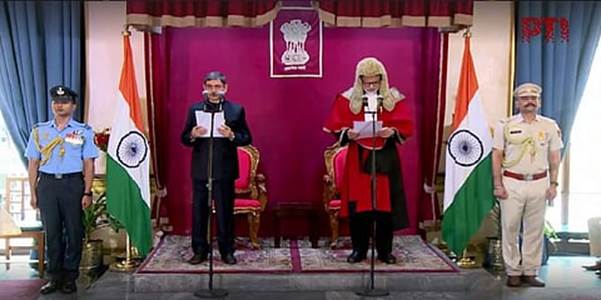
Some key appointments include:
- R. N. Ravi has been appointed the Governor of West Bengal with effect from March 12, 2026, succeeding C. V. Ananda Bose.
- Kavinder Gupta was sworn in as the Governor of Himachal Pradesh on March 10, 2026.
- Taranjit Singh Sandhu, the former Indian Ambassador to the United States, took charge as Lieutenant Governor of Delhi in mid‑March.
- Rajendra Vishwanath Arlekar, already serving as Governor of Kerala, was given additional charge of Tamil Nadu from March 12, 2026.
- Shiv Pratap Shukla was transferred to become Governor of Telangana.
- Syed Ata Hasnain has been appointed Governor of Bihar, and Jishnu Dev Varma will serve as Governor of Maharashtra.
- Nand Kishore Yadav was appointed Governor of Nagaland.
- In Union Territories, Vinai Kumar Saxena was named Lieutenant Governor of Ladakh, succeeding Kavinder Gupta.
This reshuffle — affecting strategic frontier and politically significant states — underscores how gubernatorial postings are used as tools by the Union government to maintain constitutional balance, administrative continuity, and political stability as states prepare for elections.
Who Is a Governor — Constitutional Overview
In India’s political system, the Governor is the constitutional head of a state, akin to the President at the Union level but within a state’s jurisdiction. The office is defined mainly under Article 153 to Article 162 of the Indian Constitution.
Appointment & Tenure
- Governors are appointed by the President of India — effectively the Central government — for a five‑year term, though they serve “at the pleasure of the President.” This means they can be transferred or removed before term completion.
- These appointments are made through a warrant signed by the President and are not subject to legislative approval.
Functions of Governors
Although largely nominal heads, Governors have a broad set of constitutional duties:
1. Executive Powers
Governors oversee state administration by:
- Appointing the Chief Minister (usually leader of majority party) after elections.
- Swearing in other ministers on the advice of the Chief Minister.
- Appointing state officials like the Advocate General, State Election Commissioner, and others as prescribed by law.
- In special circumstances — such as a hung assembly — Governors have discretionary power to decide which party leader should be invited to form the government.
2. Legislative Powers
Governors influence state legislation through roles like:
- Summoning/dissolving the state legislature.
- Giving assent to Bills passed by the State Assembly (or sending them for reconsideration).
- Reserving certain Bills (including money bills in some situations) for the President’s consideration.
3. Discretionary Powers
In exceptional conditions — like constitutional crises — Governors may act without or against the aid and advice of the Council of Ministers, such as:
- Recommending President’s Rule when governance breaks down in a state.
- Making decisions in a hung assembly if no party has a clear majority.
While these powers appear technical, the extent and exercise of discretionary powers have often sparked debate between states and the Centre, especially when administrations differ in political alignment.
Governor’s Role in India’s Federal Structure
India’s federal system divides power between the Centre and states, but Governors are uniquely positioned at the intersection of this relationship — they are agents of the Centre and simultaneously constitutional heads of states. This dual role has profound implications:
1. Maintaining Constitutional Balance
Governors act as a constitutional safeguard ensuring state governance aligns with the Constitution. They are guardians against extremities — such as when there’s a breakdown of constitutional machinery at the state level.
2. Centre‑State Coordination
Because Governors are appointed by the Centre, they serve as informal liaisons to facilitate smooth administrative cooperation between the Union and the state government — especially important in matters of law and order, finance, or elections.
3. Controversies & Federal Tensions
However, their role also engenders contention:
- Governors have been criticised for delaying assent to Bills passed by state assemblies, potentially obstructing state legislative will. For instance, in past years, confrontations in states like Tamil Nadu and West Bengal drew attention to the timeliness and neutrality of gubernatorial decisions.
- Because they are not elected and often hail from or are aligned with the ruling party at the Centre, opposition‑led state governments have sometimes viewed Governors as instruments of political control rather than neutral constitutional figures.
- Debates continue in legal and academic circles on reforms — such as fixing time limits on assent to bills or clarifying discretionary powers — to strengthen federal equilibrium.
Impact of March 2026 Appointments
The March 2026 reshuffle carries implications beyond ceremonial changes:
- Ahead of Elections
Several of these appointments were implemented ahead of assembly polls in states like West Bengal, Bihar, and Maharashtra. Placing seasoned administrators or trusted constitutional heads in Raj Bhavans can help ensure stable governance and adherence to constitutional norms during politically sensitive periods.
- Political Signals
Assignments of governors with diplomatic or administrative experience (like Taranjit Singh Sandhu in Delhi) suggest a preference for experienced leadership in territories with sprawling administrative complexity.
- Federal Balance
These appointments could either ease Centre‑state relations through cooperation or become flashpoints, depending on how constitutional powers are exercised — especially around assent to legislation or during governance controversies.
Conclusion
While Governors in India are constitutional heads with important duties, their appointments — particularly in politically charged years like 2026 — are deeply significant for governance, federal balance, and democratic processes.
The March 2026 gubernatorial reshuffle is more than a bureaucratic formality; it reflects how the Union government, through constitutional instruments, positions trusted figures in key states at a time when political and administrative stability is paramount.