
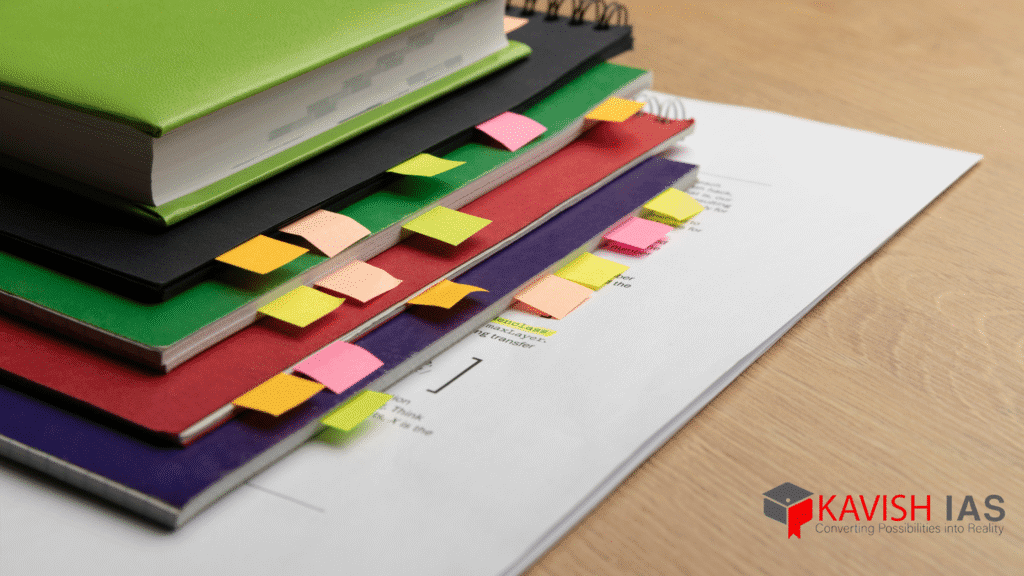
Aspirants often begin their UPSC journey with great enthusiasm, only to find themselves surrounded by a growing stack of notes. Pages get filled, new material keeps arriving, and the early excitement soon settles into a feeling that everything needs reading and nothing can be let go. Anyone who has travelled through these long months understands how quickly “collecting” starts replacing “learning.”
A lean study binder offers a calmer route. It is not a miracle tool, just an honest, tidy way to separate what truly matters from what only looks important in the moment. At Kavish IAS, widely regarded as the best upsc coaching in kolkata, students are encouraged to build a binder that reflects understanding rather than the volume of material gathered over time.
A Binder That Grows With You
A UPSC binder is not supposed to be a fixed document. It changes as your mind changes. Early entries may be rough or over-detailed, but the process of trimming and revising gradually sharpens the content. The team at Kavish IAS often reminds beginners that the binder is a partner in the long run, not a container for everything printed under the sun.
The exam does not reward hoarded information. It rewards clarity. When you limit your notes, you also give yourself the chance to return to them more often. A small set of pages, reviewed repeatedly, builds stronger recall than a large folder that is rarely opened.
This belief forms the foundation of training at the Best IAS coaching in kolkata, where students are taught to prefer precision over weight.
What Limiting Content Actually Looks Like
Limiting content is not about removing depth; it is about shaping it. Aspirants quickly learn that they need far fewer words to express an idea than they first imagine. A definition can often be written in two lines. A historical event can be summarised with a timeline and a cause-effect chain. A current affair topic becomes far easier to understand once it is reduced to its core steps.
A practical binder usually holds short summaries of NCERT chapters, refined lecture notes, small diagrams, and issue briefs drafted after reading reliable news sources or official releases. Many candidates use briefings published on established news portals such as The Hindu or Indian Express while writing their own shorter versions.
By turning large paragraphs into simple frameworks, students ensure that the binder stays light but remains rich in meaning.
How Revisions Transform Preparation
The entire purpose of a lean binder is to invite repeated reading. Without revision, even the best coaching or the most powerful explanation fades in memory. Students at Kavish IAS are encouraged to revisit their binder at a steady rhythm—after class, at the end of the week, and before tests.
This steady return to the same pages smooths out confusion and strengthens understanding. Over time, many discover that the notes they once struggled to condense become second nature. A slim binder revised five or six times builds more confidence than dozens of scattered notebooks revisited only occasionally.
The approach may appear slow, yet it works because the mind remembers ideas that appear often, not ideas stored once and forgotten.
Keeping the Binder Current Without Making It Heavy
UPSC preparation remains tied to current affairs, which means the binder must evolve with the world. The challenge lies in adding fresh notes without allowing the collection to grow uncontrollably. Kavish IAS teaches students to write brief, exam-ready updates instead of collecting entire articles.
For topics connected to policy changes, science updates, or economic reports, a short note capturing causes, significance, and implications usually proves sufficient. This prevents overload and keeps revision cycles manageable.
Why Kavish IAS Focuses on This Method
Kavish IAS built its structure around the idea that guided learning must be purposeful. This philosophy—one reason the institute is seen as the best upsc coaching in kolkata—helps students avoid the scattered reading patterns that drain both time and energy.
A lean binder sits perfectly within this system. It keeps a student anchored, ensuring that each hour of study leads somewhere clear. As the months progress, the binder becomes a record of growth, discipline, and sharpened understanding.With support from the Best IAS coaching in kolkata, aspirants gain not only study material but also the habit of thoughtful reduction—an ability that often determines how well they perform when the final papers arrive.