
The Israel–Palestine conflict stands as one of the most enduring disputes in modern history, shaped by questions of statehood, sovereignty, and international law. Recent moves by several Western nations to recognise a Palestinian state have renewed global attention, signalling a potential shift in long-held diplomatic positions and raising deeper questions about legitimacy, justice, and the future of peace in the region.
- The Israel–Palestine conflict is among the most protracted and politically charged conflicts in modern history. At its heart lie contested questions of self-determination, territorial sovereignty, occupation, refugees, and international legitimacy.
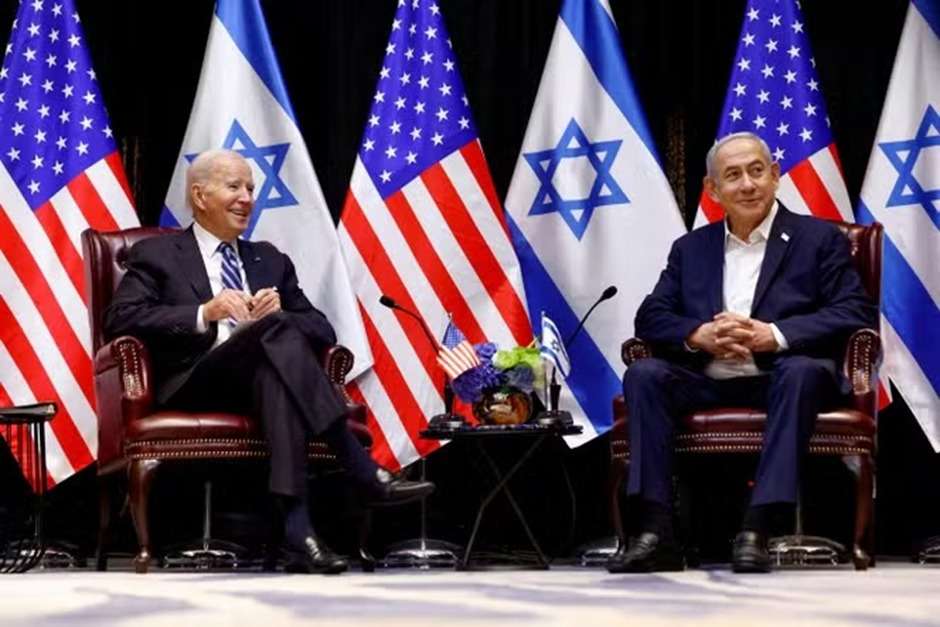
- Over decades, both sides have fought alternating wars, uprisings (intifadas), negotiated peace processes, and engaged in diplomatic campaigns.
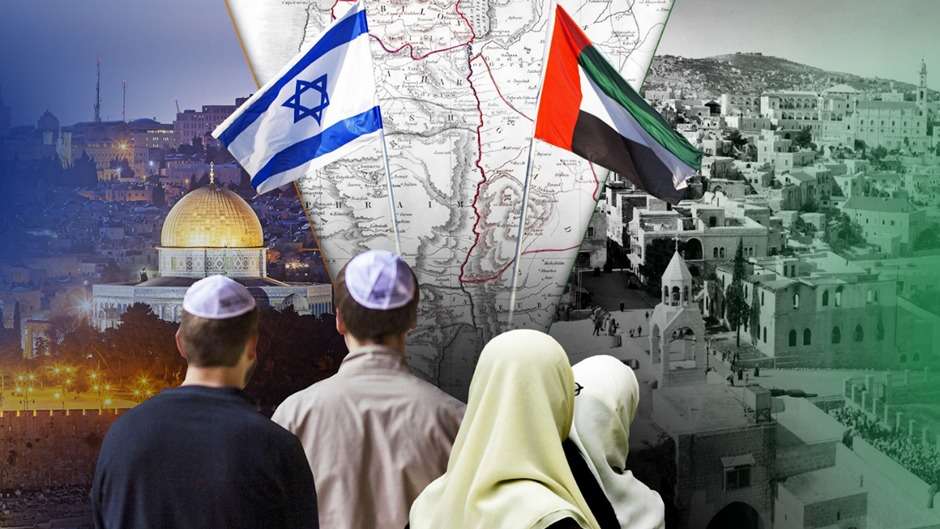
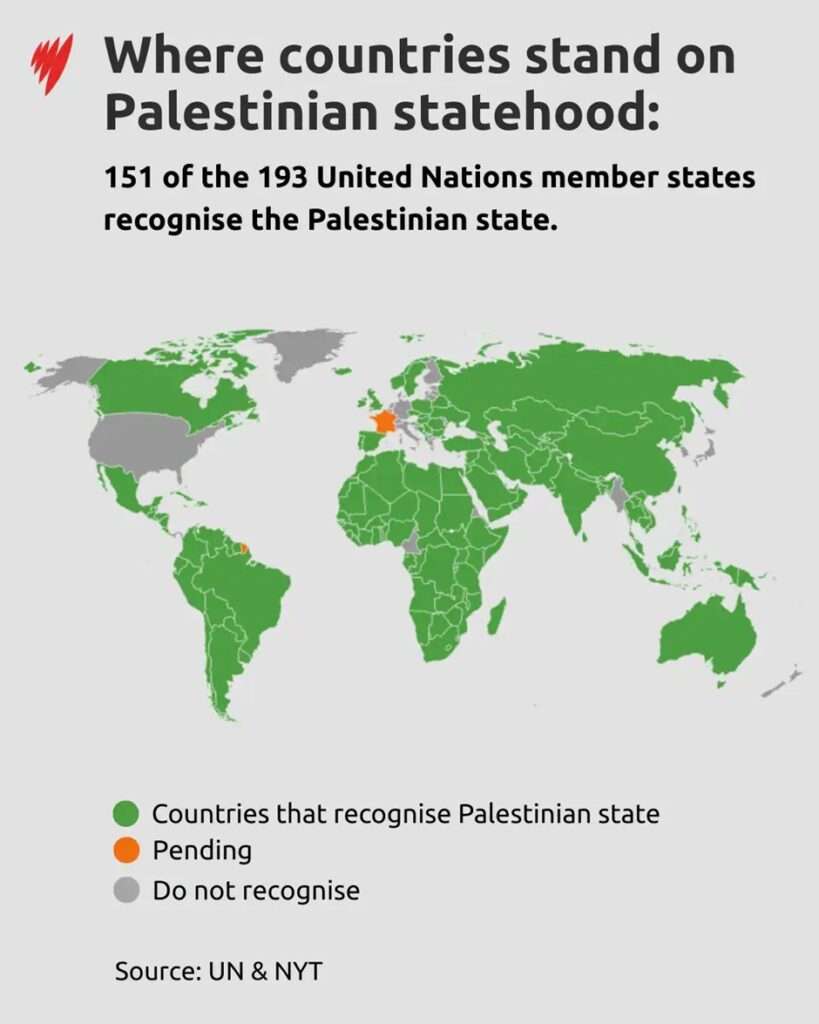
- In recent weeks, a notable shift has occurred: Britain, France, Canada, Australia, Belgium, and some other Western states have announced intent to recognise a Palestinian state around the time of the UN General Assembly.
This development raises crucial questions:
- What does recognition change?
- What are the legal, diplomatic, and political consequences for Palestinians and Israel?
- And what challenges or resistances limit its effects?
Historical Perspective & Timeline of Conflicts
- The roots of the Israel–Palestine conflict lie in competing national movements — Zionism and Palestinian nationalism — in the land historically known as Palestine.
- In the late 19th century, the Zionist movement, responding to European antisemitism, called for a Jewish homeland in Palestine.
- In 1917, the Balfour Declaration signaled British support for a Jewish national home while promising to protect existing non-Jewish communities. Under the British Mandate (1920–1948), Jewish immigration increased, deepening Arab–Jewish tensions.
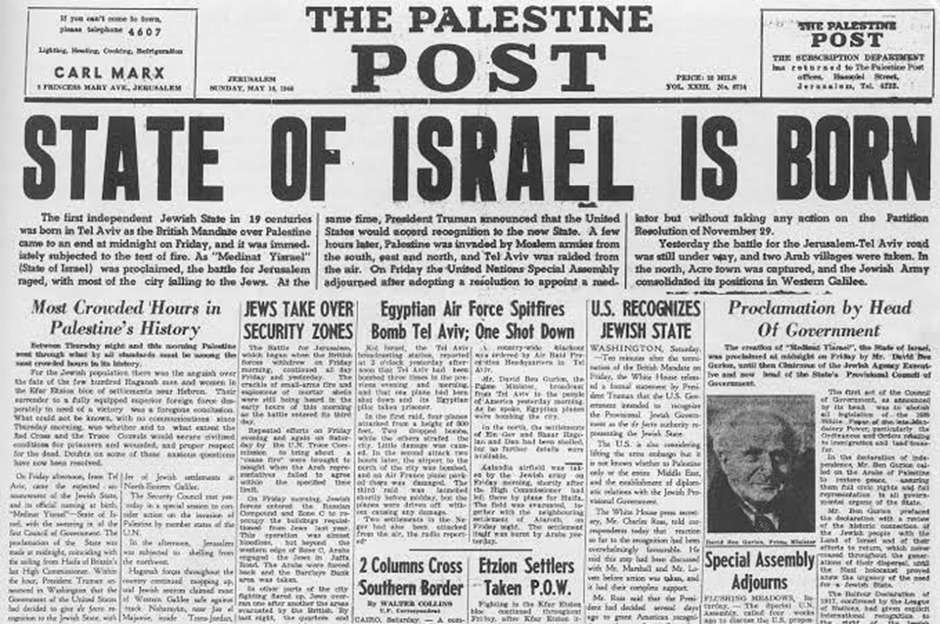
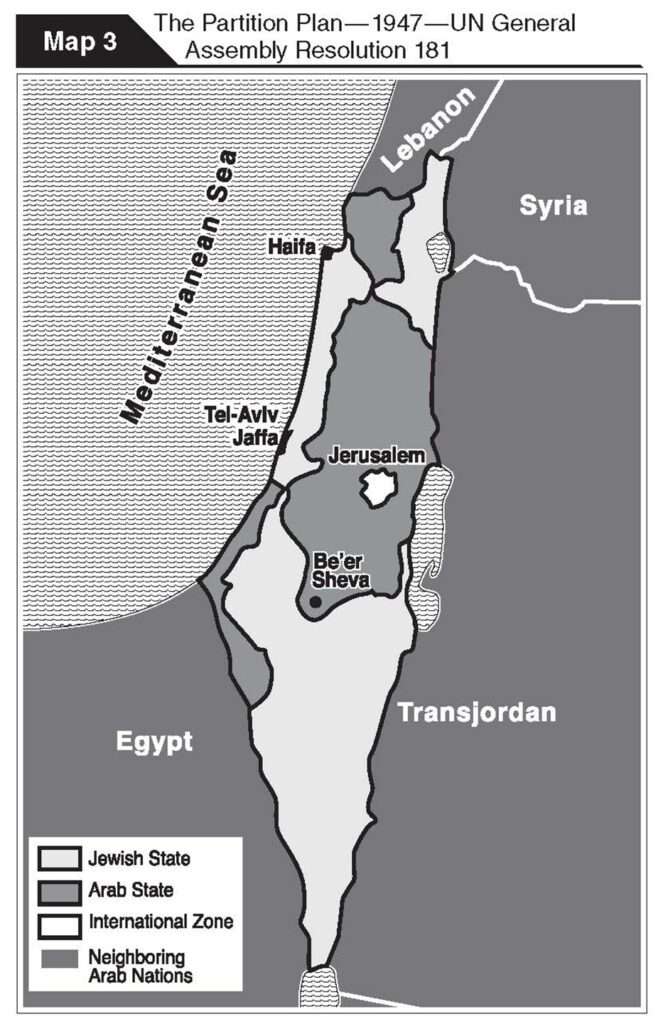
- The 1947 UN Partition Plan proposed dividing Palestine into separate Jewish and Arab states. Jews accepted; Arabs rejected. The 1948 Arab–Israeli War followed Israel’s declaration of independence. Israel gained more territory; 700,000 Palestinians were displaced in the Nakba.
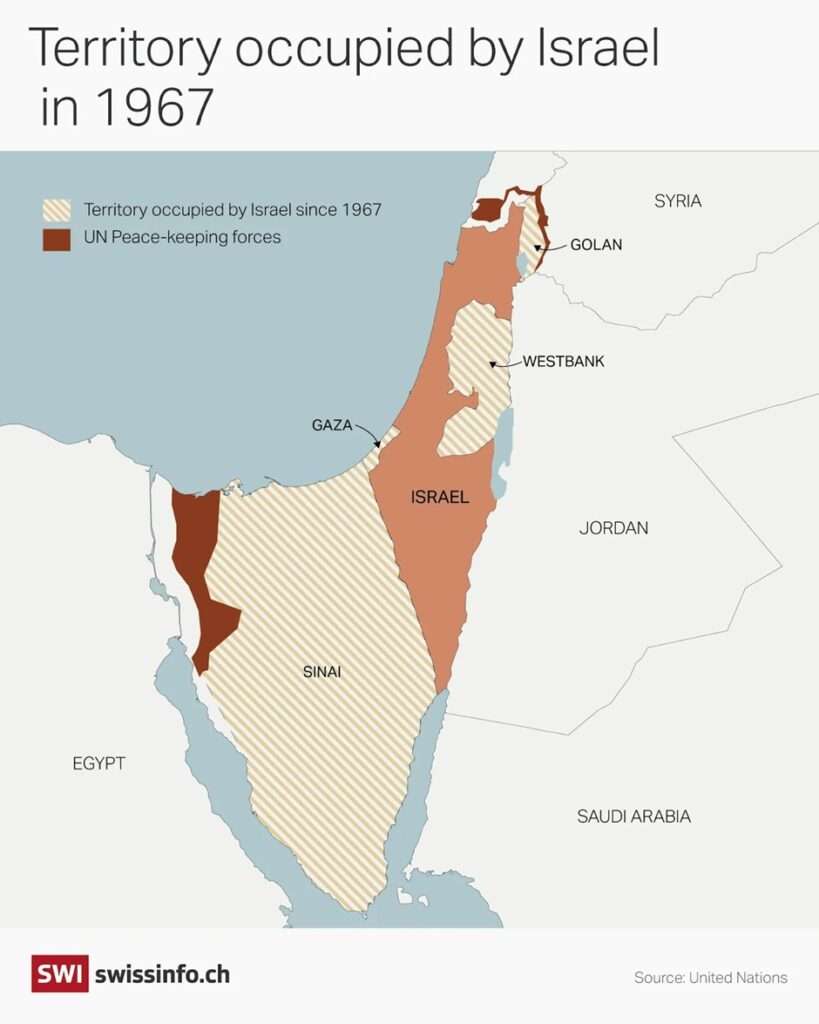
- In 1967, Israel occupied the West Bank, Gaza, East Jerusalem, and Golan Heights after the Six-Day War. This marked the start of ongoing military occupation and settlement expansion, sparking resistance.
- Israel withdrew from Gaza in 2005, but after Hamas’s 2006 electoral victory, Gaza came under its control, dividing Palestinian leadership.
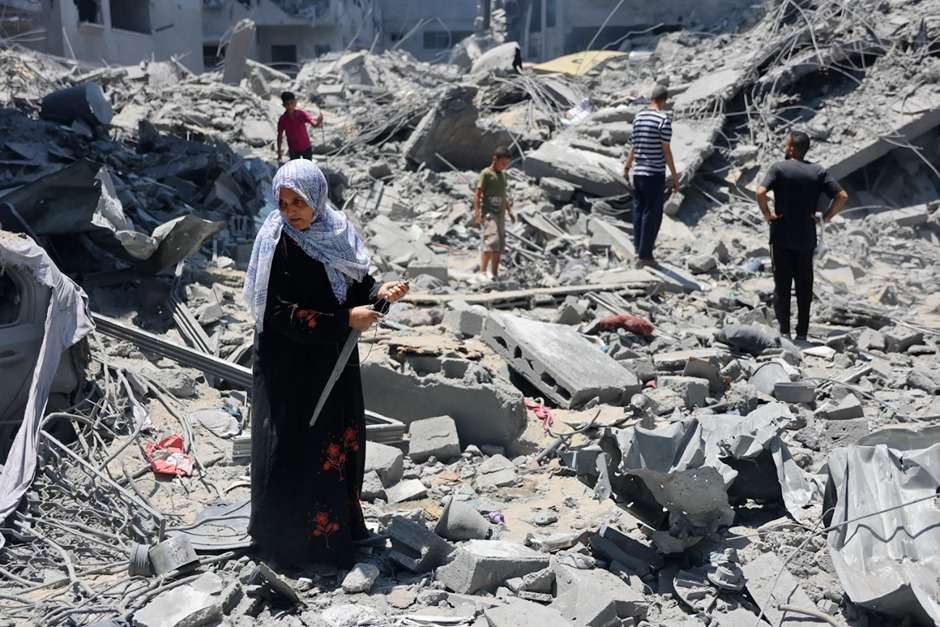
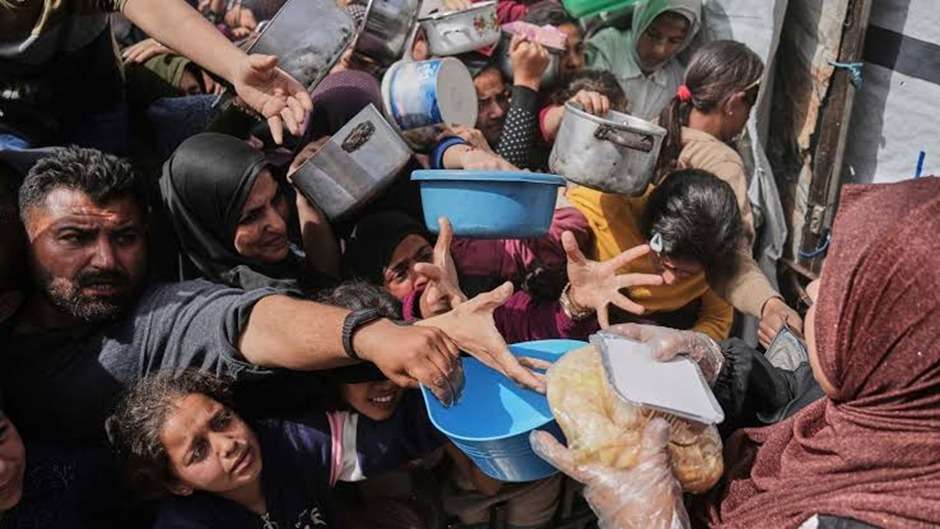
- Since 2008, repeated Gaza wars have caused immense civilian suffering. The 2023–2025 war has brought unprecedented destruction and humanitarian crisis, intensifying international calls for peace and recognition of a Palestinian state.
This chronology underscores recurring patterns: territorial conquest, displacement/refugees, occupation, resistance uprisings, failed peace negotiations, and international diplomatic interventions.
Why are Western states now signaling recognition of a Palestinian state? What has shifted?
- Moral Disapproval: The Gaza war and massive civilian suffering have led to international condemnation of Israel. Recognition of Palestinian statehood serves as a form of moral disapproval of Israel’s actions and aims to rebalance the diplomatic narrative.
- Diplomatic Leverage: Recognition is used as leverage to pressure Israel into pausing hostilities, halting settlement expansion, and resuming peace talks. It aims to isolate Israel diplomatically.
- Erosion of Western Consensus: Long hesitant, Western powers, including France and the UK, are shifting away from the traditional stance that statehood should come from final negotiations, driven by frustration with Israeli policies.

- Palestinian Internationalization: Recognition is part of the Palestinian strategy to gain global support, following their success in gaining UN non-member status in 2012.
- Domestic Political Calculations: Some governments face domestic pressure to act, with conditional recognition tied to Palestinian governance reforms, as seen in France’s stance.
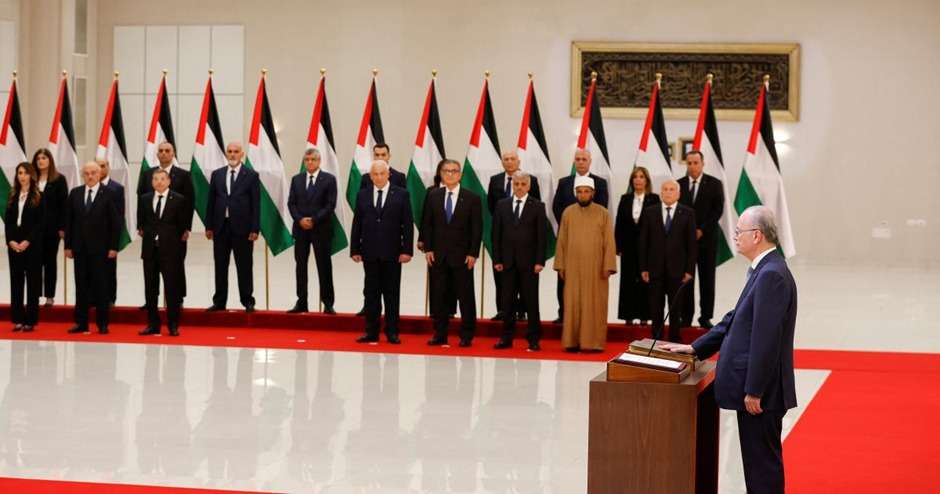
Thus, recognition today is not merely symbolic—it is a calibrated diplomatic tool.
What Would Wider Recognition Mean?
| Aspect | For Palestinians | For Israel |
|---|---|---|
| International Legal Personality & Rights | Recognition would consolidate Palestine’s status as a sovereign state, enabling participation in international organizations, treaties, and courts. Palestine would no longer be seen as merely a national liberation movement. | Israel would face increased diplomatic pressure to address its actions in Palestine under international law. Its justification for opposing Palestinian statehood might lose credibility in global forums. |
| Access to International Justice & Accountability Mechanisms | As a recognized state, Palestine can more credibly pursue claims in international courts like the International Court of Justice and International Criminal Court (ICC), especially regarding alleged human rights violations. | Israel could face legal challenges over alleged breaches of international law and human rights violations in the occupied territories, making it more vulnerable to international scrutiny. |
| Enhanced Diplomatic Status & Representation | Recognition would elevate Palestine’s diplomatic presence, allowing it to establish missions, strengthen bilateral ties, and have an enhanced voice in international forums. | Israel could face increased diplomatic isolation and reputational costs, especially at the UN and other human rights bodies, reducing its influence in global diplomacy. |
| Moral & Psychological Legitimacy | Recognition would strengthen Palestinian morale, as it affirms the international community’s support for Palestinian self-determination and statehood. It enhances the legitimacy of the Palestinian cause. | Israel may lose moral authority in international eyes, especially if it continues to reject Palestinian statehood, which could affect its diplomatic and political position. |
| Leverage in Negotiations | Recognition strengthens Palestinian bargaining power in negotiations by providing a stronger legal and diplomatic base. It could challenge Israel’s narrative of disputed territories. | Israel would be pressured to re-engage in negotiations on key issues such as borders, security, and Jerusalem. Unilateral actions may become more diplomatically costly. |
| Constraints on Israeli Actions | Recognition could provide a mechanism for holding Israel accountable for actions like settlement expansion and military occupation, pressing for compliance with UN resolutions (e.g., Resolution 242). | Israel could face more international pressure to comply with UN resolutions and face reputational damage from continued actions in the West Bank and Gaza. However, military control would remain unaffected. |
Additionally Israel will Face
- Diplomatic Isolation:- Recognition could lead to diplomatic isolation for Israel, especially in regions sympathetic to the Palestinian cause, intensifying pressure on Israel’s policies.
- Internal Political Impact:- Internal debates within Israel would intensify, particularly between hardline factions and moderates, regarding annexation, security concerns, and Israel’s identity as a Jewish and democratic state.
Practical and Structural Obstacles to Impact
- Lack of Enforceable Sovereignty: Recognition doesn’t translate into control over territory, borders, or airspace. Israel retains control over many Palestinian areas, especially in the West Bank, limiting Palestine’s sovereignty.
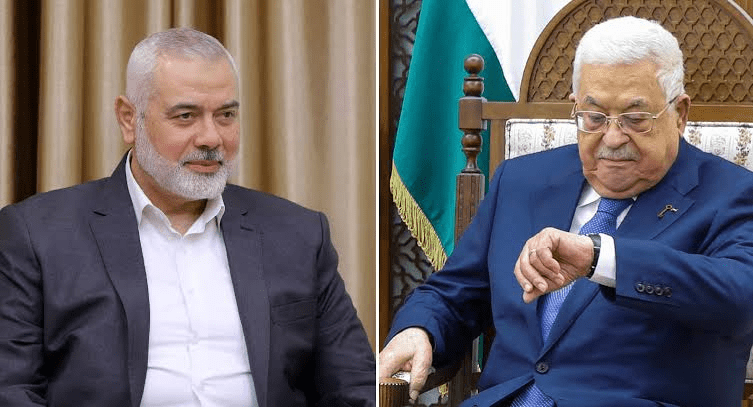
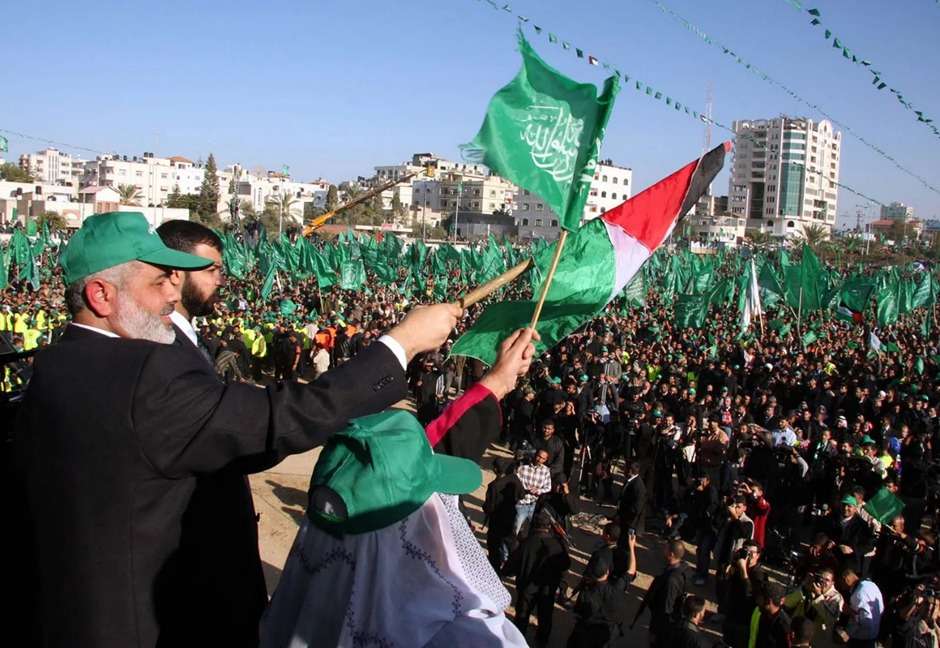
- Internal Palestinian Fragmentation: The division between Hamas (Gaza) and Fatah/PA (West Bank) weakens Palestinian unity, making recognition less meaningful if internal governance lacks legitimacy or cohesion.
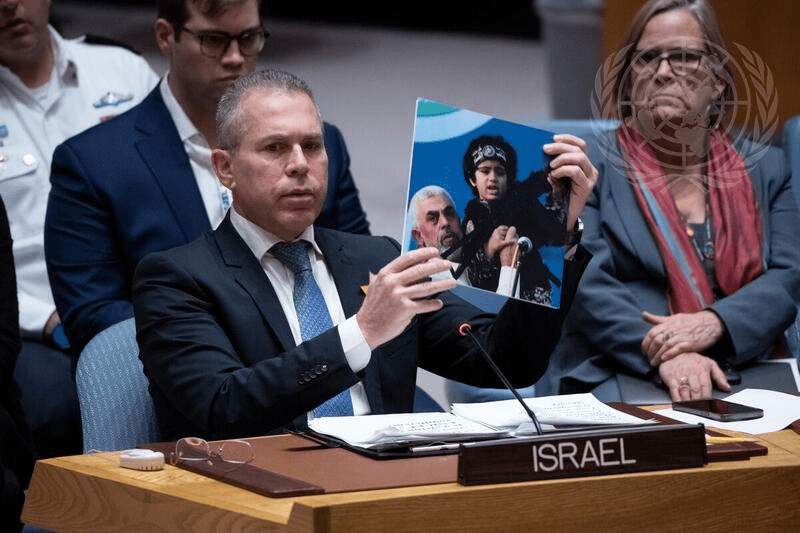
- Israel’s Opposition: Israel may block recognition efforts, intensify settlement activity, and resist peace talks, arguing that recognition is premature and undermines negotiations.
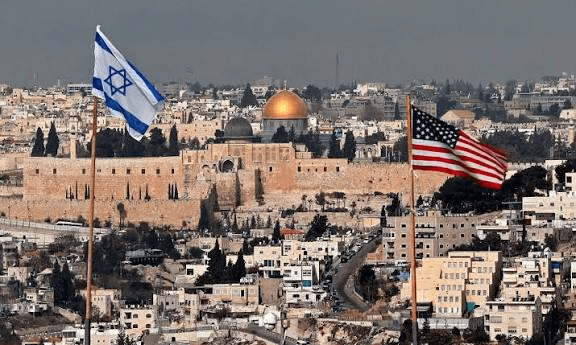
- U.S. Veto/Ally Support: The U.S. wields a crucial veto in the UN Security Council, preventing full membership and enforcement of resolutions. U.S. policies heavily influence recognition’s effectiveness.
- Symbolism vs. Substance: Without follow-up diplomacy and on-the-ground changes, recognition risks being symbolic, lacking real enforcement or tangible political impact.
Recent Developments
Recent developments have added new dimensions to the issue of Palestinian recognition, influencing both global diplomacy and regional dynamics.
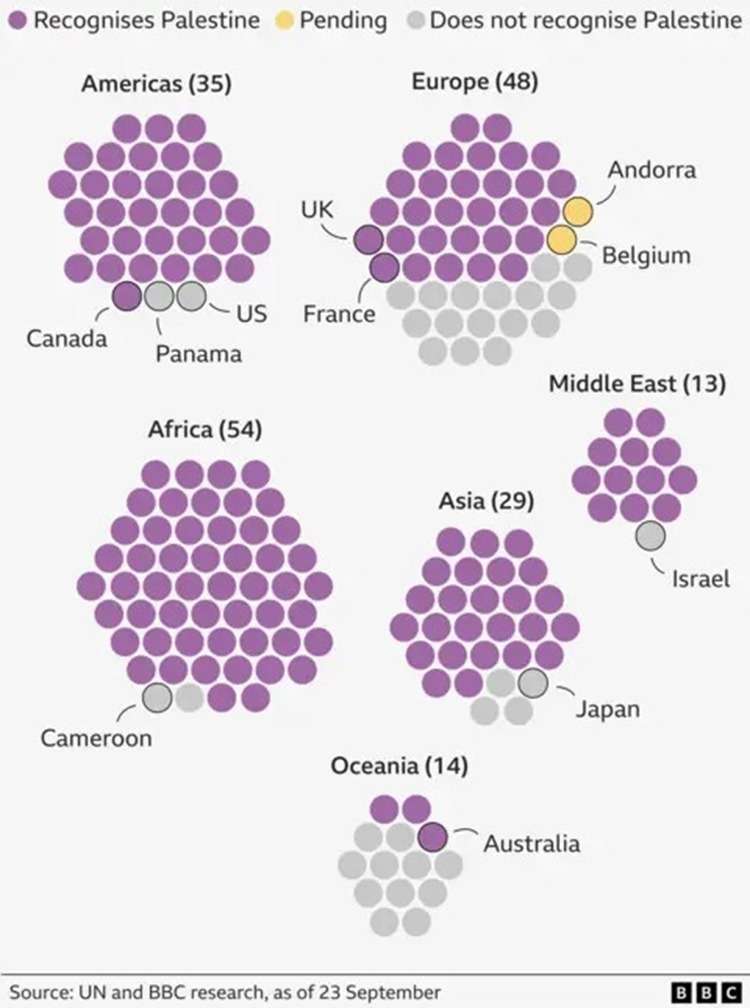
- Expansion of Recognition: Over 150 UN member states now recognize Palestine, marking a long-term trend of Palestinian diplomacy. However, Western recognition remained limited until recent announcements from Britain, France, Canada, Australia, and Belgium. This shift breaks decades of Western reluctance, signaling a potential change in diplomatic norms and influencing global perceptions of Palestinian statehood.
- Palestinian Skepticism: Despite these gains, many Palestinians remain skeptical, noting that recognition does not directly address military occupation, blockades, or the humanitarian crisis. Their skepticism stems from the belief that recognition offers limited immediate relief on the ground.
Recognition of Palestine marks a significant diplomatic turning point, but it remains only one step in a complex and fragile process. Without concrete progress on sovereignty, governance, and mutual security, symbolic gestures risk falling short of real change. The coming years will test whether these diplomatic shifts can move beyond statements of intent to foster a sustainable and just peace for both sides.
- Israeli Opposition: Israeli leaders, especially those in the current government, view recognition as undermining Israel’s security and empowering Hamas. They argue that peace must be negotiated, not unilaterally imposed.
- Israeli Optimism: Some Israeli figures (e.g., former security officials) see recognition as an opportunity to isolate extremist factions like Hamas and pave the way for diplomatic re-engagement.
- U.S. Role & Global Alliances: The U.S. remains a pivotal player, with its veto power in the UN Security Council potentially obstructing Palestinian statehood efforts. Recognition also depends on global alliances and geopolitical calculations.
These suggest that recognition remains a contested but evolving diplomatic tool, requiring careful follow-up diplomacy and international pressure to achieve tangible outcomes.
A Fragile Future Awaits
- Recognition is an important diplomatic tool, but not a comprehensive solution to the Israeli-Palestinian conflict.
- Recognition must be coupled with peace talks, enforcement mandates, and robust institutional capacity-building to be effective.
- A shift in regional alliances and a change in geopolitical strategies are crucial to support lasting peace and Palestinian sovereignty.
- The ultimate test of recognition will be whether it leads to a reduction in violence, respect for human rights, and improved security for both Israelis and Palestinians.
- Viable Palestinian sovereignty and security guarantees for Israel must accompany recognition for it to contribute to a sustainable, just peace