
• The construction of dams on international rivers has long been a source of geopolitical tension, especially in regions where water is a crucial and contested resource.
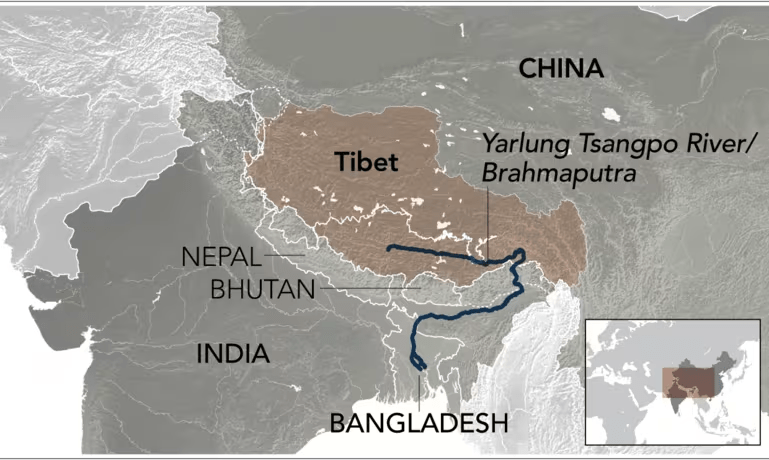
• One such case is China’s construction of dams on the Brahmaputra River, known as the Yarlung Tsangpo in Tibet.
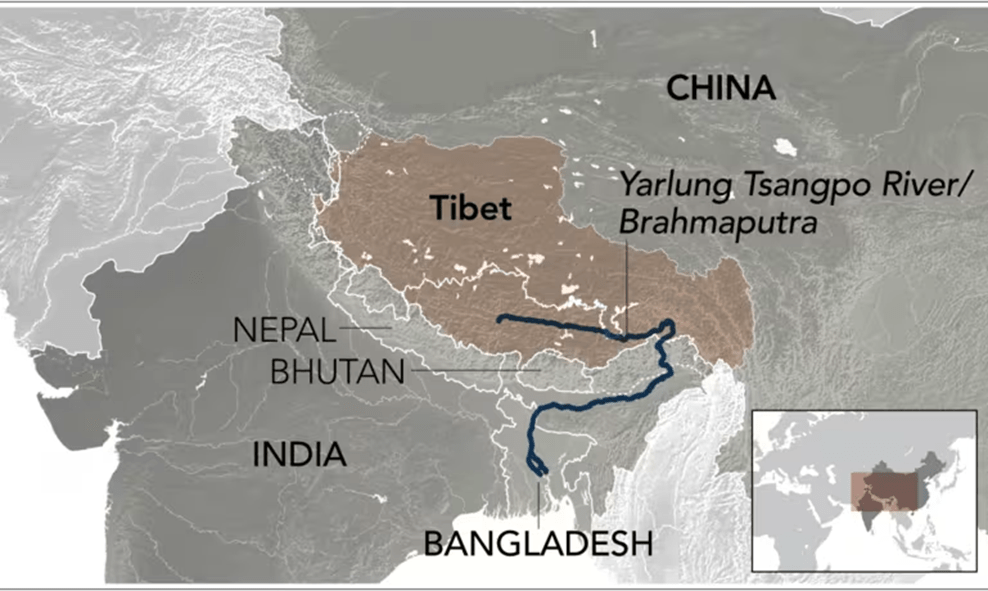
• The dam will be constructed at a major gorge in the Himalayas where the Brahmaputra makes a dramatic U-turn before flowing into Arunachal Pradesh and eventually into Bangladesh.
Chinese Plan
• China presents its mega dam on the Brahmaputra River as part of its carbon neutrality goals, aiming to generate clean energy and support Tibet’s local needs.
• However, beyond energy production, the project gives China greater control over transboundary water flows, enhancing its strategic leverage over downstream countries like India and Bangladesh.
• This reflects a dual-purpose strategy combining environmental goals with geopolitical influence.
Strategic and Environmental Implications
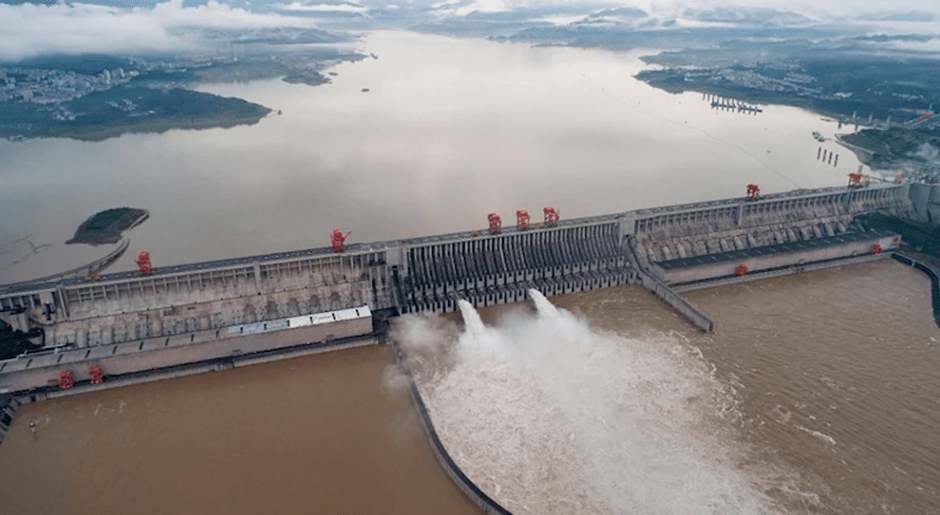
• India fears that China’s control over the river’s upper course could allow it to manipulate the flow of water, potentially causing floods or droughts downstream. This concern is dubbed as s it could be a “water bomb” exacerbating floods in monsoons, or that it could steal water in dry seasons.
• Environmentalists also warn of the ecological risks. The region is seismically active, and large-scale dam construction could increase the risk of earthquakes and landslides. The alteration of the river’s natural flow could disrupt ecosystems, harm biodiversity, and impact agriculture and fisheries downstream in India and Bangladesh.
Water Security and Geopolitics
• Water, for India and Bangladesh, both of which rely heavily on the Brahmaputra for agriculture, drinking water, and livelihoods, the unilateral construction of dams by China raises alarms about water security.
• The lack of a formal water-sharing agreement between China and downstream nations exacerbates the situation as China is not a signatory to International Water sharing agreements.
• Diplomatically, the issue underscores the broader mistrust between India and China. While both countries are part of several regional forums, they have not reached a consensus on water-sharing or joint river basin management.
India’s Counter Plan
• India has initiated steps to secure its own water security through the Siang Upper Multipurpose Project, Dibang Multipurpose Project, Subansiri Lower Hydroelectric Projectin Arunachal Pradesh.
• India is investing in satellite surveillance, remote sensing, and real-time river monitoring systems to track Chinese activities and assess water flows. This helps in early warning and flood management.
• India has raised concerns with China through diplomatic channels and in multilateral forums. Although there is no formal water-sharing treaty between the two nations, India pushes for transparency, particularly regarding flood data sharing and dam construction notifications.
• Since Bangladesh is also a downstream nation, India is enhancing water cooperation with Dhaka. This includes:
a) Joint river commissions
b) Shared flood and river flow data
c) Collaboration on transboundary river management
This cooperation helps India create a united front and regional consensus on Chinese water projects.
• India is expanding road, bridge, and defense infrastructure in border areas near Arunachal Pradesh to ensure quick military mobilization if needed. This is seen as part of broader security preparedness in case of escalations related to water or border disputes.
Conclusion
• India’s counterstrategy to China’s Brahmaputra dam combines infrastructure development, diplomacy, regional cooperation, and strategic monitoring.
• While promoting its own hydropower development, India aims to ensure equitable water use and counter any potential strategic disadvantages arising from upstream Chinese control.