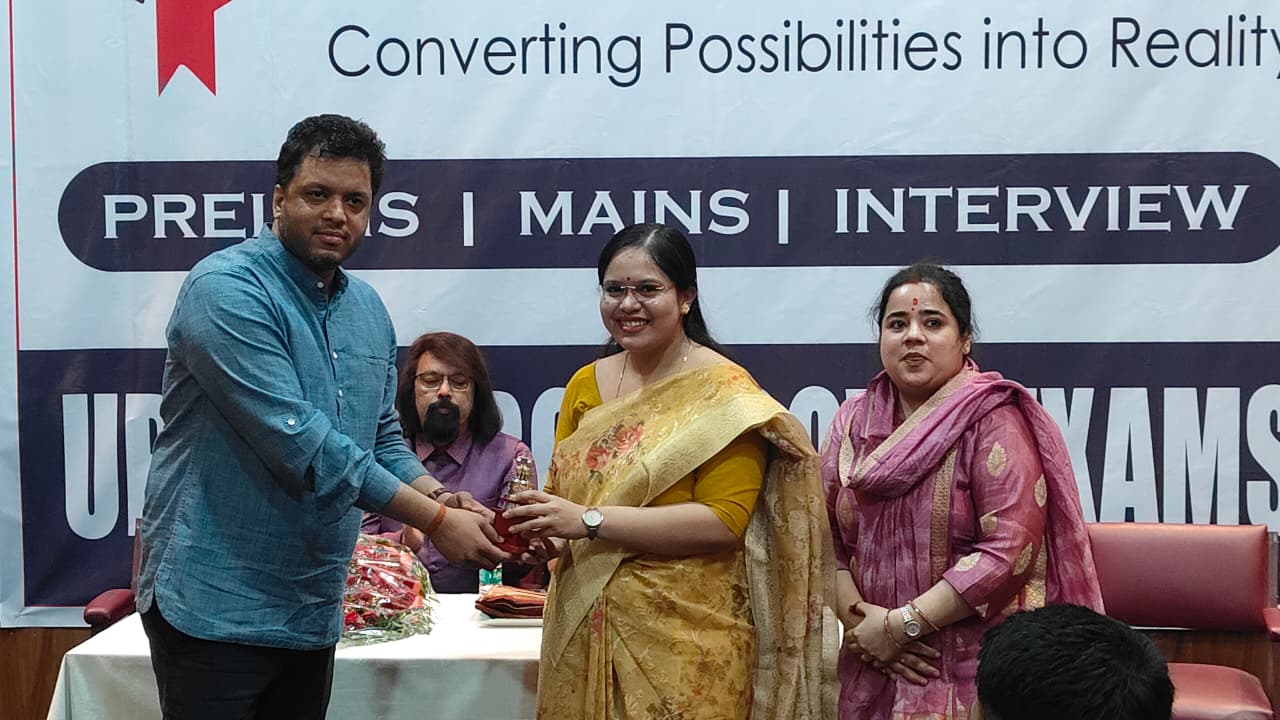

There is a certain way people used to speak about the civil services—measured, almost cautious. For women, the conversation carried an extra layer. It’s possible, people would say, but it takes a lot. The meaning was understood without being explained. That tone has softened over the years. Not disappeared, but reduced. And if you look closely at recent UPSC results, you can see why.
Women are no longer appearing as rare successes. They are present across the list, sometimes leading it, often strengthening it. The change did not arrive with a headline. It built quietly, attempt after attempt.
Reading the Results Differently
When Tina Dabi or Shruti Sharma topped the exam, the attention was immediate. Yet those moments are only the visible edge of a wider shift.
Reports, including one from The Indian Express, have pointed out that women have been securing a consistent share of ranks over the years—not just the top few.
Reference: https://indianexpress.com/article/education/upsc-civil-services-result-women-toppers-trend-analysis/
Consistency is the detail that matters here. It suggests preparation is no longer sporadic. It is sustained.
The Part That Rarely Gets Discussed
Preparation stories often highlight discipline, strategy, and resources. They do not always account for interruption. For many women, preparation does not unfold in a straight line. There are pauses—expected and unexpected. Responsibilities that cannot be postponed. Decisions that are negotiated rather than made independently.
Even self-doubt takes a slightly different shape. It is less about ability, more about permission, whether one can afford to commit fully to a long and uncertain process. These factors do not stop preparation. But they alter its rhythm.
Why Structure Matters More Than Volume
UPSC preparation is often mistaken for accumulation, more notes, more tests, more hours. That approach does not always hold.
What tends to work better is structure. A plan that can be followed even on uneven days. A pace that allows revision without constant backlog. This is where the best ias coaching institute in kolkata becomes less of a claim and more of a practical need.
At Kavish IAS, the approach is restrained. Classes move with intent, not speed. Concepts are revisited. Answer writing is corrected in a way that shows where improvement is possible, not just where mistakes exist. For someone balancing multiple demands, this kind of design makes preparation sustainable.
Mentorship, Without Excess
There is a tendency to imagine mentorship as continuous supervision. In practice, it is quieter.
It appears in small interventions, a suggestion to change how an answer begins, a reminder to stay with a subject a little longer, a conversation that clarifies confusion rather than adding to it. Over time, these small shifts shape performance.
Women aspirants often find value in this measured guidance. It reduces second-guessing. It creates a sense of progression, even when results are not immediate.
Kolkata and the Question of Access
For a long time, the path to serious preparation seemed to pass through one city. That is no longer the case. Kolkata now supports its own ecosystem. Access to the best ias coaching institute in kolkata allows aspirants to prepare without the added layer of relocation.
This matters more than it appears. Familiar surroundings can stabilise preparation. They remove logistical strain and, in many cases, make long-term commitment easier to sustain. The city’s academic tradition rooted in debate, reading, and public thought adds to that environment, even if indirectly.
What This Change Really Looks Like
It is tempting to describe the rise of women in civil services as a breakthrough. That word suggests a single moment, a clear turning point. What is happening feels different.
It is gradual. Repetitive. Built through multiple attempts, small corrections, and sustained effort. More women are entering the process with seriousness. More are staying long enough to understand it. And more are succeeding—not by exception, but by pattern.
Kavish IAS, in its own way, fits into this landscape. It does not stand apart from the process; it supports it. Quietly, consistently. The phrase “glass ceiling” still appears in discussions, but it feels less fixed than before. It has been tested from enough directions to show strain. And perhaps that is the more accurate picture—not a sudden shattering, but a structure that no longer holds in the same way it once did.